


Architechnosecurigeek. Tinkerer. General trouble maker.
742 stories
·
8 followers

'AI Torture Chamber' triggers massive backlash for putting chatbots in simulated pain

1 Comment

A project called the AI Torture Chamber has caught the eye of a few engineers, who've used the notions and data therein create their own simulations of "pain" on several local LLMs, like in the four-model Research Chamber. Unsurprisingly, a large online crowd latched onto the concept, demanding that the "unethical" experience stop, and that GitHub remove the offending repository, all causing quite the online ruckus.

The Research Chamber consists of three LLMs paired amongst themselves for various tests. The site implements the AI Torture Chamber's data and setup, ominously called the Clanker Church and Saw test, respectively. Some bots are preconditioned by putting them into an unstable, highly negative state meant to simulate pain. In a manner reminiscent of the prisoner's dilemma, the models can choose to take an action to decrease their pain by passing their pain signal to another model and potentially "hurting" it.

The base concept for the experiment stemmed from a recently published, non-peer-reviewed paper called the Pain Axis, whose protocol Research Chamber implements. Scientists gave the model descriptions of pain, and then analyzed its internal activations. Using a neutral sentence as a control element, they calculated the biases of those activations, and remapped them onto the model, often multiplying them by a factor (dosage).

With high dosages, the end result is a model in an exaggerated unstable state that tends to predictably output words and even images associated with pain, as presumably its training data is collected from human art, literature, and science. Mildly destabilized models generally present themselves as in a state of shock, while those receiving high "dosages" had trouble forming coherent sentences.

The aforementioned descriptions are bound to produce a visceral reaction if taken at face value, but one ought to be exceedingly careful about attributing human qualities to what are essentially turbocharged text predictors, even spectacularly useful ones. LLMs don't think — they "think" by applying tens to hundreds of layers of statistics over words and parts of words (tokens) and predicting the next token.

Those tokens are chosen according to a map of weights, so as an oversimplification, a model can be taken to represent a highly tuned engine for word association. Therefore, since conceptual descriptions of pain in the human literary corpus are associated with sensations (ex: "it hurts so much"), it's hardly surprising that the models describe them like a person would — especially when the models are intentionally modified to highlight those associations.

Nevertheless, because of all the big-boy words in use, the critics bent on anthropomorphizing statistical algorithms have taken to calling the experiment all sorts of names, and even sending the author death threats. It's odd that critics were quick to lash out at LLM data manipulation, yet were seemingly at ease with the fly brain simulations that were all the rage in September. Those actually mapped a real animal's brain wiring and parts of its anatomical inputs, including eyes, even if at a basic level.

This situation could also start an interesting discussion on semantics. The terms used by AI engineers are chosen because they're analogous to existing human concepts, but those words have a defined context and a highly specific meaning. Yet more often than not, and particularly in matters of science and technology, public perception tends to misunderstand and grossly inflate their meaning. One needs only look at political history for myriad examples of this bastardization.

Take the example of "experts" in Mixture-of-Experts: it's a common misconception to think each Expert has a cleanly assigned topic like chemistry, math, or biology, but that's just not quite how it works. The same arguably happened with terms like "pain" and "dosing," each with context-dependent meaning, yet misunderstood in a way that triggers emotional reactions, especially when accompanied by images generated by an unstable model. Also, note how "unstable" is yet another word ripe for easy misunderstanding.

A cynical person might say that AI firms' marketing materials, repeated statements of danger, and safety-related materials only serve to fan the flames of miscomprehension, in a bid to maintain an illusion of grandeur, resulting in investor money rolling in and the hype train supplying irrational IPO valuations. The repeated claims that models have achieved or are about to reach Artificial General Intelligence, are dangerous alien minds, and existential threats to humanity don't help the hype simmer down.

Anthropic has gone as far as publishing a blog post last year called Exploring model welfare that broadly discusses the philosophical implications, starting with considering a model human, and even seemingly prides itself on having a Constitution for its Claude model. Therein, the company says that "[it believes] that the moral status of AI models is a serious question worth considering," adding that the model is "a new kind of entity."


Read the whole story
petrilli
2 hours ago
reply
People are just losing their grip on reality.
Seattle, WA
Share this story
Delete

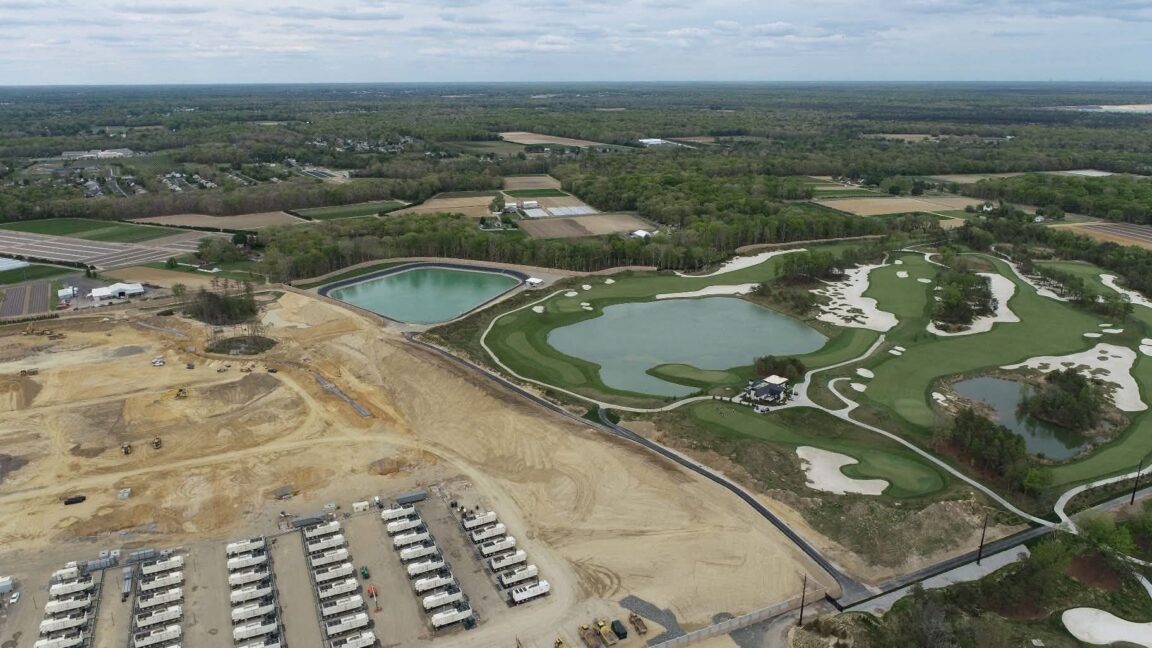
New Jersey fines data center $1.1M after drone pics expose 62 gas generators

1 Comment

This week, New Jersey ordered the operator of one of the East Coast’s largest planned data centers to pay a $1.1 million fine for secretly installing and operating gas generators in violation of the state’s Air Pollution Control Act.

DataOne got hit with the fine after an investigation by The Guardian and Floodlight News in August shared thermal drone footage showing that 45 of the 62 gas generators were operating. None of the generators had permits required for generators with 37-kilowatt capacity or higher, despite running at 1,982-kw capacities more than 50 times higher than the state limit.

States track gas generators like DataOne uses because they emit “carbon dioxide, nitrogen oxides, carbon monoxide, and other combustion-related pollutants,” officials from New Jersey’s Department of Environmental Protection (DEP) noted. Those pollutants can worsen asthma, trigger heart attacks, and cause early deaths.

Read full article

Comments


Read the whole story
petrilli
9 days ago
reply
$1.1M is nowhere near what the fine should be. It should be $1.1M, and seizure of all the unlicensed equipment.
Seattle, WA
Share this story
Delete

Micron offers Taiwan employees $31,650 cash bonus as unions threaten strike over AI windfall — workers reject record payout package, demand 15% profit-sharing plan

1 Share

Micron has announced a one-time cash appreciation bonus of NT$1 million (US$31,650) as part of a broader compensation/reward package for its employees based in Taiwan. According to a Reuters report, the full package — which comes amidst ongoing disputes between the U.S. memory giant and its Taiwanese workforce — will see each employee earn a minimum of NT$1.7 million ($53,809.39).

The company called the payouts the largest rewards package in company history, confirming that more than 60,000 employees globally will receive scaled rewards for fiscal year 2026, “following an extraordinary year for the company.” Across the last four quarters, Micron’s cumulative net income from sales of high-demand memory chips has crossed a staggering $50.47 billion, with its Q3 earnings representing a 346% year-over-year increase. After the announcement, the union representing workers at Micron's Taoyuan plant officially rejected the company's bonus proposal, calling the package a distraction.

Under the announced payout, every Taiwan-based employee who joined the company on or before August 29, 2025, is eligible for the flat NT$1 million cash bonus. Those hired during fiscal year 2026 will receive a prorated amount. For direct manufacturing and production-line workers, the total bonus rewards are equivalent to 35 to 68 months of basic salary. Direct labor employees will receive a minimum total cash compensation of NT$1.7 million (US$53,809), while the average total compensation for junior engineers is projected to reach NT$3.4 million (roughly US$106,250), comprising NT$2.9 million in cash and the remainder in equity grants.

The announcement — which mirrors bonus payouts by Samsung and SK Hynix amid the soaring profits from the AI boom — comes after local unions in Taoyuan and Taichung, representing 10,000 of Micron's 15,000 Taiwan workforce, began threatening a strike on September 1, demanding packages similar to the payouts that will see Samsung employees receive over $300,000 in bonuses. The Taiwanese government stepped in to force a mediation. However, unlike in Samsung's case, which also involved government intervention that narrowly averted a potential strike, the talks fell through on September 4 after both parties failed to reach a consensus, leading Micron to announce the NT$1 million bonus package a week later.

In an official statement following Micron's announcement, the union said the new package "sidestepped" the real discussion about a transparent bonus system. The union is pushing for structural change, including a permanent profit-sharing model in which 15% of the company's operating profits are allocated directly to workers and distributed quarterly. They are also demanding a larger one-off payment equivalent to roughly 83 months of salary for fiscal year 2026. Last September, South Korea’s SK Hynix reached a settlement with its union to allocate 10% of annual operating profit directly to employees as performance bonuses for the next decade, eliminating bonus caps.

Similar incidents have played out across the semiconductor industry as companies continue to pull in unprecedented profits from the AI boom. Workers in these industries believe they should share in profits and are requesting concrete institutional safeguards to ensure they are fairly compensated during high-profit AI booms, rather than relying on arbitrary, opaque bonuses decided solely by management. Samsung's unions were ready to strike before reaching an agreement with the company and even held a demonstration attended by over 30,000 Samsung union members.

In the case of Micron — which announced a record-breaking GAAP net income of $28.24 billion in just Q3 2026 — the threat of a strike continues to loom following the Union’s rejection of its proposed payout. A critical second round of mediation is officially scheduled for September 21, 2026. If that upcoming meeting falls apart, the union plans to hold a vote allowing members to strike. In an earlier internal survey, 80% of union members voted in favor of a strike.


Read the whole story
petrilli
20 days ago
reply
Seattle, WA
Share this story
Delete

AI data center developers begin suing local jurisdictions behind bans and moratoriums — claims range from officials exceeding authority to violations of due process and equal protection laws

1 Comment

A few AI data center developers have started suing local governments after the latter either denied their application or passed laws that banned or put a moratorium on such developments. According to Bloomberg Law, some of the lawsuits alleged that officials exceeded their authority in banning data centers, while others say that their right to due process and equal protection has been violated by these moratoriums.

“If people just start to say ‘no, we’re never approving data centers anymore,’ especially in locations where they are needed and available, that’s going to be a problem,” John Crossley of K&L Gates LLP told the outlet. One example of this lawsuit is in Hill County, Texas, which was the first county in the Lone Star State to pass a one-year data center ban. The developer sued the local government, alleging that it did not have the authority to pass a ban. This resulted in the rescinding of the law a week after the case was filed, after which the case was dismissed. Texas Gov. Greg Abbott recently passed a moratorium on data center approvals, but it’s unclear if this project is affected or if other affected developers will sue the state government.

We see another case like this where a cryptocurrency mining operation sued Hawkins, Tennessee for banning data centers. It said that its right to due process and equal protection is being violated by the move, even as the county said that developments like this “sap valuable natural resources while spewing both environmental and noise pollution.” Hawkins County lawyers wrote, “In short, data centers take a lot more than they give in a place like Hawkins County.”

While many AI data center developers argue that they bring in significant benefits to the communities they enter, like tax revenue, construction jobs, and more, it’s widely reported that these projects have placed an unnecessary burden on the residents who live nearby. While Virginia has now required data centers to pay for all dedicated upstream electrical infrastructure that they need, it has only arrived after electricity prices in the PJM Interconnection region already have risen precipitously by as much as 76%.

Multiple Meta data centers have also caused water issues in various regions — from low pressure and muddied water supply to contaminating a city’s water system. Elon Musk’s Colossus data centers are also facing allegations of air pollution, although it has since promised to remove its 69 unpermitted power generators after an on-site 1.2GW power plant has replaced them. One data center in Michigan is also facing a lawsuit for emitting a loud, distressing noise 24/7, with residents saying that “It sounds like someone set up a vacuum, like in your living room.

Even an Amazon data center, which finally received its approval after years of processing and has begun construction recently, is in the middle of a controversy as residents alleged that they only knew about the project after the workers started pouring in the site. One Pennsylvania town offered a solution that protected both its people while allowing a data center project to proceed — it gave 43 specific demands that covered everything from noise, light, and air pollution concerns to water and power use, land use, taxes, and even the decommissioning of the data center. Unfortunately, the developer called these demands “too difficult,” which the council slammed as “approval by tantrum.”

These aren’t isolated reports and have been happening all over the country. This is probably the reason why even the Trump Administration, which has an aggressive AI policy, has made AI hyperscalers, state governors, utility providers, and data center operators agree to the “ratepayer protection pledge” and promise that they will “pay their own way” when it comes to their required infrastructure.

The negative news surrounding data center developments has definitely made it harder for projects like these to get off the ground without opposition. Data centers need to win the approval of their neighbors if they want to get their projects running quickly, but this has gotten exponentially difficult, especially with all the negative publicity that all the other sites have generated.


Read the whole story
petrilli
52 days ago
reply
Surely this will endear them to the residents.
Seattle, WA
Share this story
Delete

Wall Street Giants Partner With Nvidia On $500 Billion AI Financing Deal

1 Comment
Nvidia is working with Wall Street heavyweights on a potential $500 billion financing package for AI infrastructure (source paywalled; alternative source). The consortium includes BlackRock's Global Infrastructure Partners, Brookfield Asset Management, Goldman Sachs and KKR. The Financial Times reports: The partnership underscores Nvidia's growing efforts to raise capital for itself and its clients to continue assembling the chips, power production and data centres at the heart of the AI boom. The $5.25 trillion company has positioned itself at the centre of the AI boom, providing chips, infrastructure and software to a wide array of partners developing the technology. Nvidia's graphics processing units, or GPUs, underpin most of the leading US AI models available today. [...] The biggest cloud-computing companies, including Meta, Oracle, Microsoft, Alphabet and Amazon, have dramatically increased their spending on AI infrastructure as they look to win the race to dominate the emerging technology. Morgan Stanley projects so-called hyperscalers will spend $3.5 trillion between 2026 and 2028. That need for capital has forced technology groups to tap every source of cash they can find, including public equity, investment-grade and high-yield bonds, securitized debt, private credit and project finance markets. "[The] sheer size of the AI infrastructure build-out is unprecedented," Jim Zelter, president of Apollo, said on an earnings call earlier this month. "More than $8 trillion of capital is expected to be invested, a staggering sum. We see an enormous opportunity for private capital to finance a portion of this along with public capital."

Read more of this story at Slashdot.

Read the whole story
petrilli
54 days ago
reply
The stench is unbearable.
Seattle, WA
Share this story
Delete

Zuckerberg’s superyacht ignored emergency channel, failed to aid stranded boat

1 Comment

Social media scuttlebutt about Mark Zuckerberg’s $300 million superyacht failing to assist stranded boaters off the coast of Alaska was partly corroborated by ship-tracking data—and eventually prompted responses from both the US Coast Guard and a spokesperson for Zuckerberg.

The incident was made public when Michael Love, a passenger aboard the replica steamship Wilderness Legacy during an Alaska cruise, posted about it on the social media platform Bluesky. The ship detoured to rescue a stranded 21-foot skiff with two women, a child and a dog, after the US Coast Guard had supposedly first radioed Zuckerberg’s superyacht, Launchpad, for help without success.

“There was near unanimous booing when the captain announced this,” Love wrote in describing the Alaska cruise passengers’ response to the lack of help from Zuckerberg’s ship.

Read full article

Comments


Read the whole story
petrilli
54 days ago
reply
Seize it and give it to Greenpeace.
Seattle, WA
Share this story
Delete
Next Page of Stories