Architechnosecurigeek. Tinkerer. General trouble maker.
748 stories
·
8 followers

Jensen Huang allies build a "war room" to get him back at Nvidia

1 Comment

Jensen Huang is considering a comeback as Nvidia’s chief executive, as allies in Silicon Valley pressure the company’s board to reinstate him days after the tech executive resigned over reports he had affairs with a suspected Chinese spy and a subordinate.

Huang has discussed with confidants the possibility of returning, according to multiple people familiar with the matter—even as an independent probe by Nvidia’s board investigates the conduct that led to a spectacular leadership crisis at the $4 trillion chip company this week.

One Huang ally told the FT they were putting together a “war room” of Silicon Valley executives to lobby for the former Nvidia chief’s return and would try to garner support from the White House.

Read full article

Comments


Read the whole story
petrilli
4 hours ago
reply
Just the worst people.
Seattle, WA
Share this story
Delete

Elon Musk says it ‘would be an honor’ to hire ousted Nvidia CEO Jensen Huang

1 Comment

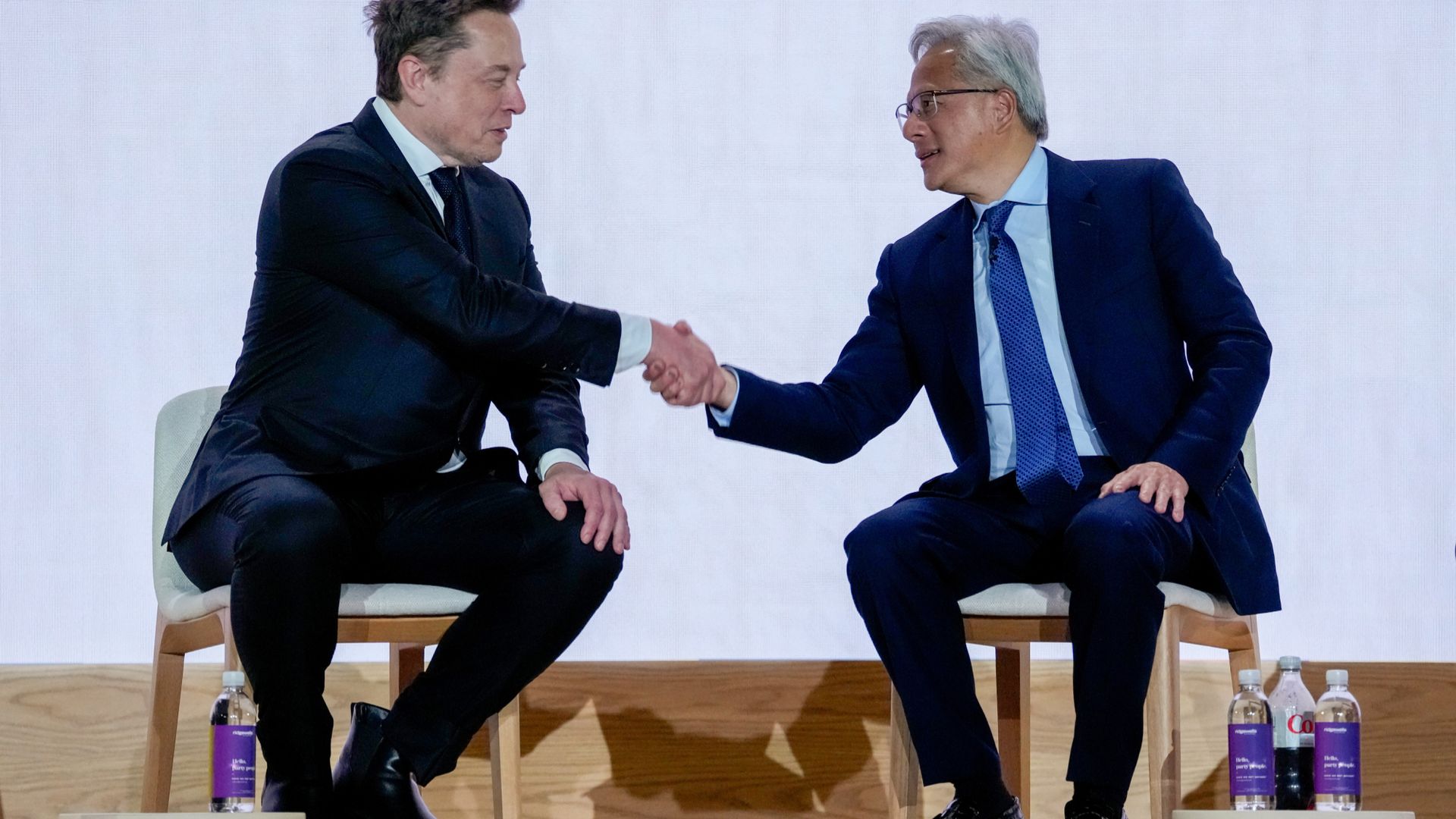
Jensen Huang resigned as Nvidia CEO two weeks after his relationship with a suspected Chinese spy was revealed by intelligence sources and a day after his affair with an Nvidia vice president became publicly known. But hours before this move, when it was just rumored that the Nvidia board was planning to oust him, Elon Musk had already stated his willingness to hire the former Nvidia chief on X. A random X user posted, “Elon please hire Jensen,” to which the billionaire replied, “That would be an honor.”

Despite the scandals that Jensen is currently facing, he still has the engineering know-how, deep knowledge of the industry and its inner workings, plus multiple connections across the world, which would be extremely valuable for any company looking to break into the semiconductor industry.

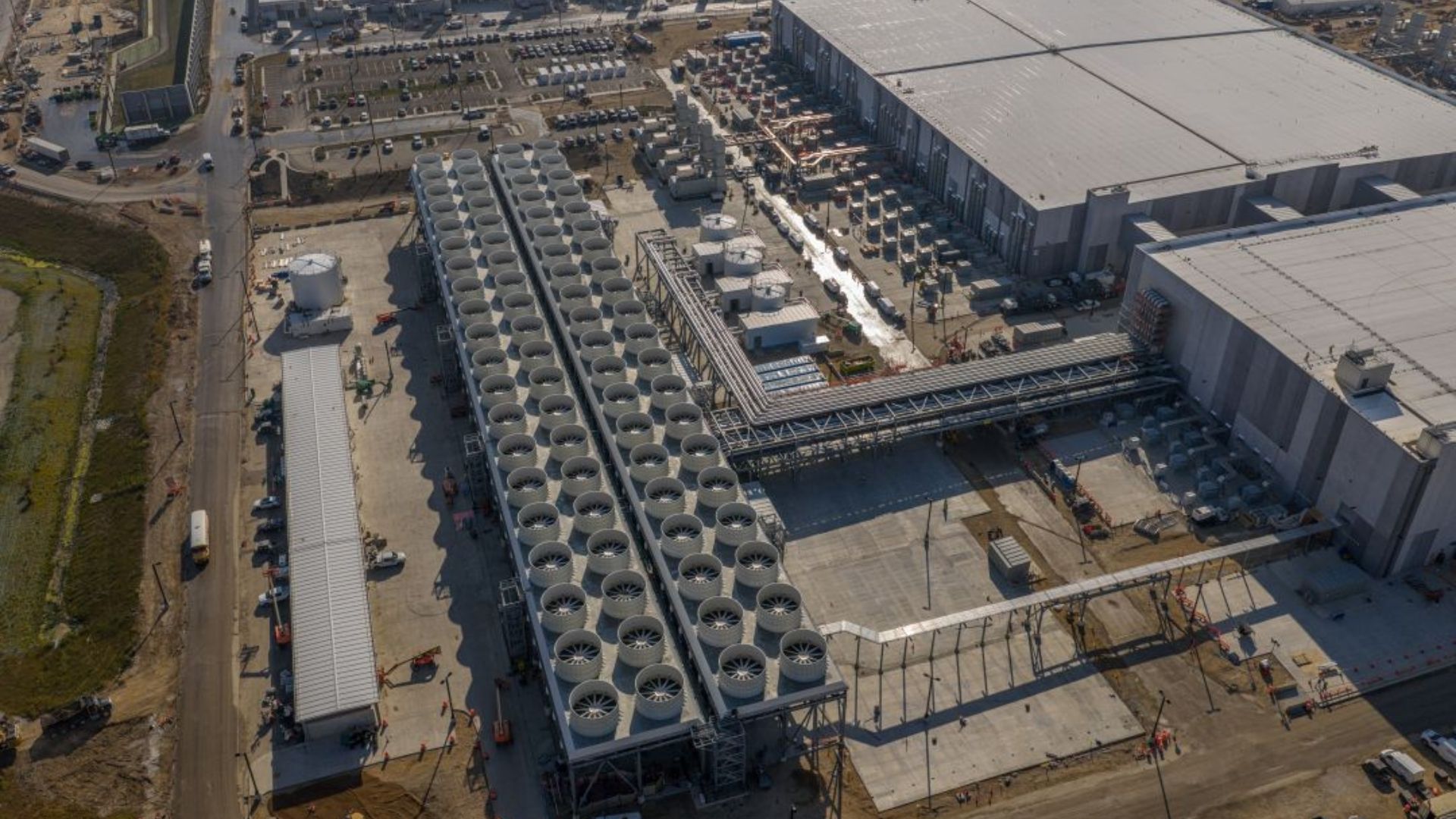
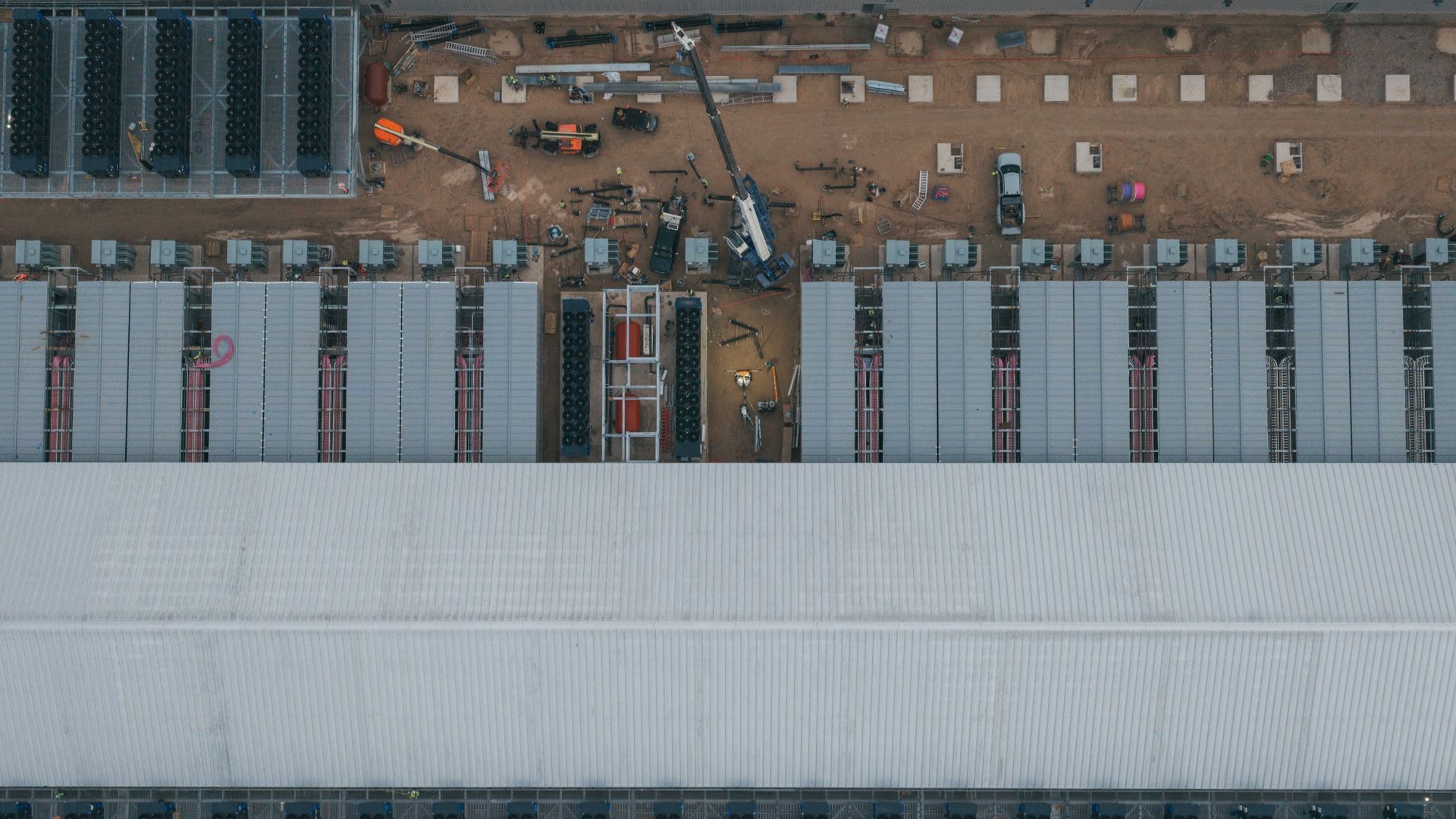
This is exactly what Elon Musk is doing with his Terafab project, which he first mentioned in November 2025. Jensen Huang even warned that this was going to be a challenge, pointing out that “the engineering, the science, and the artistry of doing what TSMC does for a living is extremely hard.” Nevertheless, Musk poured his resources into the project, with construction on the Terafab facility in full swing and with plans to hit volume chip production by the second half of 2028. Musk himself said that the site targets a production capacity of a million wafers a month by 2032. Tesla has an ambitious AI accelerator roadmap, and SpaceX has even touted making its own GPUs in the future.

We still don’t know what Jensen Huang’s plans are, but even though he’s no longer a part of the Nvidia board and its leadership, Jensen and his wife, Lori, still jointly own approximately 800 million Nvidia shares through various trusts and LLCs, while Huang himself personally owns around 70 million Nvidia shares.

Aside from that, he still has an outstanding invitation from Congress to discuss Nvidia’s security protocols, which could turn into a subpoena if he snubs them, although we don’t know how his resignation would affect the closed-door meeting. There’s also a reported FBI investigation into his relationship with Alice Huang, the Megaspeed executive who was allegedly instrumental in the import of $7.5 billion worth of Nvidia AI GPUs into China and is suspected of working with China’s Ministry of State Security.

Jensen Huang is just the latest in the long list of executives who resigned or were ousted from their leadership position because of a relationship or an affair with a subordinate. This includes former Boeing CEO Harry Stonecipher in 2005, HP CEO Mark Hurd in 2010, Intel CEO Brian Krzanich in 2018, and former McDonald’s CEO Steve Easterbrook in 2019. Musk himself is known to have had relationships with subordinates from his various companies, and that he has even fathered four children with Shivon Zilis, a top executive at Neuralink who started working at Tesla in 2017, through IVF.

It’s still not confirmed if Musk’s reply is a serious offer for Jensen Huang. But if the former Nvidia chief ever decides to work for Musk on his Terafab project, then Jensen could put his effort and expertise into turning it into a formidable competitor to Nvidia.
Read the whole story
petrilli
4 days ago
reply
If I were Huang, I wouldn't want this endorcement.
Seattle, WA
Share this story
Delete

Anthropic skips six-year waitlist with massive $3.4 billion gas turbine generator deal

1 Comment

Anthropic, the AI company behind Claude, has agreed to spend $3.4 billion securing 1.7 gigawatts (GW) of gas-fired generators for its AI data centres, taking over equipment orders originally placed with Caterpillar by Texas-based supplier OnePWR Solutions. According to Reuters, the agreement was reached in late September, and also covers the engineering and construction work needed to install the equipment. Anthropic is not buying OnePWR itself. Instead, it is taking over the supplier's existing generator commitments, which were placed roughly two years ago but required additional financing. By taking over the existing orders, Anthropic avoids having to start from scratch and wait for Caterpillar to find another larger order into its production schedule. That timing matters too, as larger orders for large gas turbines and generators are piling up, and manufacturers are struggling to keep up with demand, especially from AI companies.

Notably, global turbine orders have reportedly exceeded 100GW, while manufacturing capacity stands at an estimated 60GW to 70GW. Average delivery times in the U.S. have reached six years, with some prospective orders extending into 2030 or 2031.

The latest purchase puts Anthropic increasingly in familiar territory. Elon Musk’s AI has already turned to gas-powered generation to bring its large computing facilities online without waiting for conventional grid connections. Recently, xAI installed eight converted General Electric jet turbines at a data center in Mississippi. Each unit can generate up to 50MW, giving the installation a potential combined output of 400MW. The deployment has also attracted environmental scrutiny, with the Southern Environmental Law Center challenging the site's emissions permits.

The environmental implications of relying on gas-fired generators have also attracted criticism. “This is pretty grim—these kinds of generators are terrible for the environment.” Shakeel Hashim, founder of ReadTransformer, tweeted, commenting on Anthropic's purchase. His reaction points to an issue Anthropic will have to contend with as it expands its power infrastructure: securing electricity quickly does not remove the environmental costs of generating it.

Musk's companies have been moving further into the equipment business, too. In August, it emerged that the company was bringing turbine-blade and vine manufacturing in-house, with Musk identifying components production as a major constraint on generator deliveries, with some turbine blades reportedly taking between 60 and 90 weeks to be manufactured. Earlier, in July, SpaceX also acquired APR Energy, a company with a fleet of trailer -mounted gas and diesel generators capable of producing more than 1GW.

The approach is not exclusive to Musk's businesses. OpenAI has followed a similar route for its first Stargate data center in Abilene, Texas. In July, we reported that Crusoe, the company developing the facility, had acquired 29GE Vernova LM2500XPRESS gas turbines, each rated at 34MW. Together, the 29 turbines could generate up to 986 MW. Anthropic is taking a different path, though, by stepping into OnePWR’s existing Caterpillar orders, securing generators that were already in use, rather than buying new equipment.

That said, the power shortage is forcing AI companies to look beyond new generator orders. There has been an upsurge in demand for used and refurbished turbines, including retired jet engines converted to generate electricity. But even those alternatives have limitations, including maintenance requirements, remaining service life and suitability for continuous operations. For Anthropic, however, taking over OnePWR’s Caterpillar orders could provide a way around some of those hurdles. The agreement also provides installation capabilities, meaning the company is securing more than the generators themselves.


Read the whole story
petrilli
7 days ago
reply
Doing their best to accelerate the collapse of humanity.

But at least they're getting a lot of profit.

Oh wait.
Seattle, WA
Share this story
Delete

OpenClaw creator says he spent $10 million in tokens last month

1 Comment

Peter Steinberger, member of technical staff at OpenAI and the creator of OpenClaw, estimates that he spent around $10 million in tokens running AI workloads last month. But don't feel bad for him, because it's all coming out of investors' pockets.

He made this admission at the Cloudflare Connect 2026 conference in San Francisco on Wednesday, in a conversation with Cloudflare CTO Dane Knecht.

Knecht previously observed that Steinberger has acknowledged having "a virtually unlimited token budget, which not all of us in the room have."

Responding to the audible surprise rising from the audience, Steinberger added, "What people don't always understand is not all of that is useful."

That only amplified the murmuring, perhaps not the effect he had been after. Meanwhile, his employer, OpenAI, is reportedly trying to "accelerate funding" ahead of rival Anthropic's expected IPO.

Steinberger's subsequent musing about his preferred way of working failed to recognize Knecht's acknowledgement of financial limitations.

"I feel like the main challenge a lot of people still have is that our infrastructure structure hasn't really caught up yet," Steinberger said. "Like why is this still using my computer? Shouldn't this all be in the cloud?"

Apart from the privacy and compliance implications of relying on cloud-based AI, cost remains a consideration for anyone not setting venture funds alight. Cloud-hosted agents can be expensive. Shouldn't this all run locally?

Pointing to the OpenClaw project and how a lot of open source maintainers have given up accepting pull requests due to frustration with AI slop, Knecht asked Steinberger whether we're approaching the death of open source or a golden age of AI.

Steinberger said he thinks the way pull requests are handled needs to change because people don't explain how they arrived at their proposed changed code.

"If I see your thoughts, how you got from A to B, my trust in the output is way higher than if you just throw the finished work across the fence," he said.

Knecht also asked Steinberger whether everyone in the room would have hundreds of AI agents running in a few years.

Steinberger doubts it will be hundreds.

"I think everyone will have some sort of intelligence that runs and thinks and helps them throughout the day or even predicts what could help you in the future," he said. "So instead of asking the question, maybe you already get the answer."

Toward the end of the session, Knecht raised the issue of trust and how to know what data to give to an agent.

That's a hard question, Steinberger admitted. Part of it, he said, has to do with how much you trust the underlying model itself, because so much of model behavior is not governed by the harness – the code that wraps the model.

"A lot of decisions that I built into OpenClaw early on now can change because the models are so much better," he said.

Even if risks like prompt injection have been reduced through engineering efforts, Steinberger said, "you might not want to give your agent all the permissions."

Instead, he suggested using an agent to authorize your agent.

"You want to have another agent that can give it permissions or not and then this agent has to negotiate with another agent," he said. "Many times the agents are like, 'oh yeah, actually maybe I shouldn't do this,' or 'there's a simpler way that keeps it within the guardrails.' So those those two systems combined greatly increase my trust that I just can let the agent rip." ®


Read the whole story
petrilli
26 days ago
reply
No no, this is absolutely not a bubble or any kind of psychosis.
Seattle, WA
Share this story
Delete

Pennsylvania issues alert on congenital measles—something US hasn't seen for decades

1 Comment

Pennsylvania's health department issued a health alert Monday as cases of measles in pregnancy and, in turn, cases of congenital measles have continued to increase. Before the current outbreak—which continues to rage across the state—congenital measles cases hadn't been seen in decades, the department noted in its advisory.

The alert included detailed clinical guidance for managing measles exposures and cases during pregnancy as well as cases in newborns. Many doctors have never seen such cases in their careers given the decades of successful use of the measles, mumps, and rubella (MMR) vaccine. But now, with vaccination rates slipping nationwide, the highly infectious virus is better able to get footholds in communities and spread rapidly through under-vaccinated pockets, as is happening in Pennsylvania.

As of October 19, Pennsylvania had reported 1,286 measles cases this year across 42 counties. Of those, 247 have been hospitalized, and six people have reportedly died (though the latest reported death is still pending an investigation by the state health department before it is added to the state tally).

Read full article

Comments


Read the whole story
petrilli
27 days ago
reply
Great work everyone. Just great.
Seattle, WA
Share this story
Delete

Outrage grows as CDC reportedly poised to fund "unethical" vaccine trial

2 Comments

Outrage has erupted among health experts over news that the Centers for Disease Control and Prevention is still eager to fund a widely condemned vaccine trial that would expose newborns in Guinea-Bissau to hepatitis B, putting them at high risk of a lifelong infection, which can lead to liver cirrhosis, liver cancer, and premature death.

The trial was suspended in January after its unethical design came to light and drew international outcry. Although the trial is still halted, staff of the CDC director's office told the agency's budget office in late September to set aside $1.6 million to fund the trial, according to a report by Rolling Stone. The money was to be pulled from funding for the CDC's global health security programs, which might otherwise go toward efforts like combating the Ebola outbreak currently raging in the Democratic Republic of the Congo.

The Department of Health and Human Services, which oversees the CDC, did not respond to a request for comment from Ars Technica.

Read full article

Comments


Read the whole story
petrilli
38 days ago
reply
No thing too evil.
Seattle, WA
Share this story
Delete
1 public comment
scm7sc
38 days ago
reply
Awful
MD, USA
Next Page of Stories