Architechnosecurigeek. Tinkerer. General trouble maker.
727 stories
·
8 followers

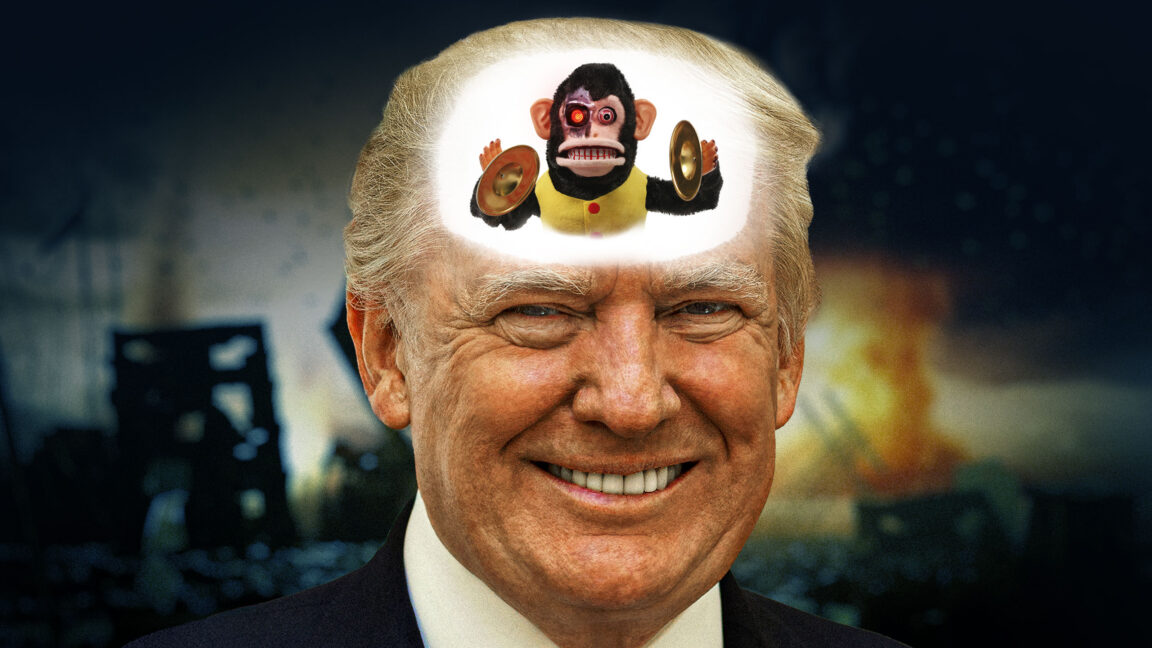
CEOs Who Think AI Replaces Their Employees Are Just Bad CEOs

2 Shares

In the last three months I’ve had people forward me four separate examples of a CEO losing his or her mind over AI. What’s been striking to me is the similarity in each case: It would be an “all hands” email in which the CEO talks up how amazing LLM tools are and saying that everyone in the company MUST start learning to use them immediately or they should look for a job elsewhere. Sometimes they talk about hiring “consultants” to come in and teach the team how to use the tools properly. Sometimes they are setting up “office hours” or internal “AI hackathons.”

But in every case the gist is the same “holy shit AI is amazing and you are expected to use it at your job all the time.” The worst case of these were the few companies that set up token leaderboards, which is perhaps the dumbest way possible to encourage learning how to use LLMs well. Good usage of AI includes learning how to view tokens as a scarce resource. Simply counting how much you use as a good thing is ridiculous because it’s incredibly easy to waste tokens on counterproductive uses.

As regular readers of Techdirt know, I actually do think that these tools are powerful and important, but I also think there are many problems with them and limitations to how useful they really are. I think when someone learns how to use them well and willingly chooses to use them as a tool to assist their work, they can be quite powerful. But the willingly choosing to use them part of that is important.

No one who is forced into using these tools will ever learn to use them well.

So CEOs losing their minds over the tech are not being helpful. Box CEO Aaron Levie — himself a genuine AI believer — puts his finger on exactly why.

CEOs are uniquely prone to AI psychosis because they’re sufficiently distant from the last mile of work that still has to happen to generate most value with AI.

So when they play with AI, they see the happy path results, often not considering the next 10 or 20 things that have to happen to get sustainable results from agents.

“Look I made this awesome product prototype”. Yes but you didn’t have to review the code before it went into production and fix a bunch of issues.

“Look I generated a contract”. Yes but you didn’t verify all the terms before it goes out to the counterparty and didn’t have to wire up all the past contracts to work with.

The best thing you can do as a CEO is to use AI a ton to figure out the real implications of agents in the enterprise, and come out the other side with an appreciation for both the upside and the real work that goes into them.

I will say that I hate the term “AI psychosis” because the term is extremely misleading, and many psychologists and psychiatrists have complained that it is inaccurate and may cause more problems itself. But the general sense that CEOs are going overboard with AI is definitely happening.

And I think Levie’s thinking as to why is also dead on.

Much of the issue may be in how disconnected the traditional CEO is from the people at a company actually getting stuff done. Normally, they have teams and layers and the actual work of getting things to work in a real way is so far removed from a CEO that they just get snippets of the details that filter back through the various org charts.

The problem tends to show up when a CEO is handed an agentic tool like Claude Code, and has it create something, which will work just fine, and thinks “oh, wait, why do we need so many people, when I can just sit here and make things work?”

This is a bad CEO.

Making things work is different than making things work well. Or well at scale. Or well at scale in a specific environment. Obviously, it depends on the kind of project and what it’s being designed to do, but oftentimes the reason a company has a bunch of employees is to fill in the seemingly small, but incredibly important details that CEOs might not ever get much visibility into: things like security or legal compliance or accessibility or who knows what else.

Using an agentic tool to build something that works is all well and good, but building a product for the mass market to use — and use well, and use safely — involves much, much more. Agentic coding tools can sometimes help with that too, but the leap from “I built a thing” to “therefore anyone can build a thing” misses the entire point of why you hire knowledgeable, experienced people in the first place. It’s also why I think the best case of these tools is building totally personalized tools to assist you in accomplishing a specific task, and not for building mass market tools.

This all reminds me of cargo cult thinking: The CEO knows that somewhere in the org, employees are pecking away at computers and work gets done. So they figure that themselves pecking away with Claude Code and seeing work get done is the same thing. It’s not. All those other steps those people are handling — the ones the CEO never sees — still need to happen.

That’s not to say employees wouldn’t benefit from a deeper understanding of both the power and the limits of these tools — they would. But there’s something darkly comical about watching a CEO go all in on the tech and then immediately conclude it means they can fire half the staff.

It seems pretty clear to me that companies that think they’ll be able to layoff huge swaths of workers because of LLM tools are going to find out they’re mistaken pretty quickly. The power of LLMs is that when used well and used willingly it can help employees to get more done, but that doesn’t mean you need fewer humans. You need more humans who know how to work productively.

Separately, companies pointing to LLMs as a reason for large layoffs are, in most cases, just using it as an excuse. They over-hired, and “AI efficiencies” is a much more palatable story for Wall Street than “we made bad headcount decisions.”

Levie’s prescription, though, is right: CEOs should learn how the tech works, but that includes the limitations of the technology. If a CEO thinks the prototype they vibe coded is production-ready, let them ship it and see what happens. If they think a vibe coded contract is as solid as one a lawyer reviewed, let them find out what the legal bills look like when it falls apart.

Yes, the tools are powerful, but a CEO who thinks they replace the work of employees is simply a bad CEO.

Read the whole story
petrilli
57 minutes ago
reply
Seattle, WA
Share this story
Delete

Startup’s ‘miracle’ solid-state battery actually uses lithium-ion chemistry, according to third-party tests — Donut Lab raised $25M and is valued at $1.25B on what now appear to be debunked claims

1 Comment
A Finnish startup’s startling claims to have a production-ready ‘miracle’ solid-state battery have thoroughly collapsed under independent scrutiny.

Read the whole story
petrilli
1 hour ago
reply
I am shocked! Shocked I tell you.
Seattle, WA
Share this story
Delete

Trump plan to test AI models has a problem—US security teams were gutted by DOGE

1 Comment

On Tuesday, Donald Trump finally signed his executive order expanding the government's efforts to conduct voluntary safety testing of frontier AI models. Now, critics are warning that the order may be short-sighted, offering only performative reassurances that the government is actively monitoring for AI risks, while changing very little about how and when models are deployed.

Last month, Trump abruptly canceled a signing event, where he had hoped to launch an earlier version of the EO with CEOs of leading AI firms in attendance. Invited at the last minute, several CEOs simply couldn't make the signing but still signaled support for the order. Officially, Trump claimed he postponed the event because he worried that the EO might have gone too far and had become a "blocker" impeding AI innovation. Reports indicated there was infighting in his administration as cybersecurity experts clashed with officials committed to deregulating AI.

The watered-down EO that Trump signed promises not "to stifle this innovation with overly burdensome regulation" and establishes no requirements for AI firms. Instead, it sets up a voluntary process for companies to collaborate with the government on safety reviews that Trump's EO claimed would "ensure that the best and most secure technology is deployed rapidly to confront any and all threats to our country."

Read full article

Comments


Read the whole story
petrilli
4 days ago
reply
I appreciate the continued faith that there's any concern with competence in this administration and that this isn't yet another example of grift and bribery.
Seattle, WA
Share this story
Delete

Huawei chairman thanks the US for export restrictions on chips, says it supercharged China’s semiconductor industry — Washington’s export controls encouraged Chinese firms to invest in R&D and build their own tech stack competing with American tech

1 Comment and 2 Shares
Huawei's current Rotating Chairman thanked the United States for its export bans, which boosted the progress of China's semiconductor industry. He made the comment after unveiling the groundbreaking LogicFolding chip architecture, when reporters asked him how the company came up with the idea.

Read the whole story
petrilli
7 days ago
reply
I am shocked at this completely predictable outcome.
Seattle, WA
acdha
7 days ago
reply
Washington, DC
Share this story
Delete

Chilling Effects

3 Shares

Younger Americans have soured on the second Donald Trump presidency, but they are not protesting it.

Despite an unpopular Iran war and an even more unpopular Trump administration, college campus protests nationwide have gone silent. And at many schools, student activism is virtually nonexistent.

This silence comes in the wake of a relentless Trump administration war on campus speech that has involved lawsuits, arrests, deportations and expulsions.

Reports cite a range of complicated factors for the restraint, from apathy to technology-induced incapacity. But as public policy and law and social science experts, we believe students aren’t protesting for a very simple reason: They are afraid. They are self-censoring and disengaging from campaign activism to avoid punitive measures.

In law and social science, we call this impact a chilling effect—the behavioral tendency for people in face of a threat to self-censor and restrain their activities for self-protection.

It’s increasingly clear to us that these impacts are not incidental or ancillary to Trump administration policy. Rather, the chilling effects are the point. This is the closest thing to a consistent governing strategy in Trump’s second term.

The broader chill of Trump threats

Chilling effects can be subtle, but today they are everywhere. And it’s not just students who are chilled by Trump administration threats.

Professors are censoring themselves in lectures and rewriting syllabuses. Researchers are stripping grant applications of words that might attract federal scrutiny, or abandoning the topics entirely. Media outlets are modifying their news coverage to avoid Trump lawsuits or sanctions.

Law enforcement and regulatory agencies are refusing to investigate Trump-aligned actors inside or outside government, and major national law firms are declining cases challenging Trump administration policies.

Publishers are “stepping back” from LGBTQ+ books and other progressive subjects. Many in targeted immigrant communities are afraid to leave home to go to work or school.

In most cases, these people and institutions are not being specifically targeted or threatened by Trump. But they are afraid, and their fear is doing the administration’s work for it. They stay silent, avoid attention and confrontation, and look the other way. In other cases, they change their speech and behavior to accommodate or conform to the administration’s worldview.

Of course, there are counterexamples, such as the winter protests in Minneapolis in response to brutality by agents with U.S. Immigration and Customs Enforcement, and the recent “No Kings” rallies. But even here, the broader but less visible trend—chilling effects—is evident.

For instance, in recent reporting on the latest No Kings rallies, many media outlets observed that students were noticeably missing, despite the Trump administration’s unpopularity among younger Americans.

A persistent strategy

We believe none of this is by accident.

In a new book, “Chilling Effects: Repression, Conformity, and Power in the Digital Age,” one of us—Jon Penney—explains how law, technology, and state and corporate power are weaponized to chill and repress, and the dangers this poses for the United States and other democratic societies. The other—Bruce Schneier—has extensively studied the security infrastructure enabling this.

What we see isn’t gratuitous government cruelty, chaos or vengeance. Instead, we see a persistent strategy to maximize fear and chilling effects in ways that are corrosive to freedom and democracy.

Research suggests that surveillance, personal threats, uncertainty and abuse of power are key factors in doing so. The federal government has a clear and systematic pattern of employing these very mechanisms across a number of domains far beyond campuses.

They are evident in militarized raids by Immigration and Customs Enforcement and in journalists being arrested and indicted for reporting on protests. They are made clear in the long list of political enemies the Trump administration has investigated or threatened, including the Federal Reserve chairman. And they can also be seen in the weaponization of technology, including ramping up surveillance to target critics and protestors.

Corrosive to freedom and democracy

History offers some guidance on impacts.

During the McCarthy era, overreaching laws, surveillance, and public and private sector reprisals ostensibly targeted alleged communists. But the real aim was often to suppress progressive journalists, trade unions and political opposition.

In the 1960s, these same tactics were reused by Southern states to chill the Civil Rights Movement. Historians have written about how the widespread fear and conformity of these periods reshaped American society in enduring ways, including the destruction of progressive political movements and both delaying and muting the Civil Rights Movement itself.

When such state threats are systematized, they can foment a broader climate of fear, self-censorship and conformity. In that climate, dissenting speech, political opposition, democratic mobilization and other checks on power become increasingly difficult, even dangerous. It is no surprise, for instance, that Trump critics regularly admit to self-censorship, fearing for their safety.

Chilling effects are thus not only repressive—causing self-censorship—but productive. They produce conforming and compliant speech and behavior, which can have longer-term social impacts. They not only undermine protected rights and suppress accountability but can promote social change—even without a popular mandate to do so.

This latter point is often missed. It explains Trump’s assaults on universities and cultural institutions such as the Kennedy Center for the Arts and the Smithsonian. Often dismissed as peculiar Trump obsessions, they are fully consistent with Project 2025—the sweeping policy blueprint for Trump’s second term authored by a coalition of conservative groups and its call to target the “institutions of American civil society” and “wield federal power” to “reverse” decades of progressive cultural advancements.

In the near term, this means an increasingly weakened democratic society, with the government and its patrons enjoying freedom to pursue their objectives. Over the long term, this can mean a changed society as more conformist and compliant speech and culture become more widely accepted and entrenched.

Not inevitable

In our view, this future is not inevitable, just as the McCarthy era “Red Scare” and violent civil rights era repression were not. In both cases, fear and chilling effects were resisted in law and civil society, as they can be today.

But the central mechanisms—surveillance, uncertainty, personal threats and abuse of power—would need to be addressed. For instance, new legislation could ensure justice for lawless government actors and constrain surveillance. Courts can block abuses of federal power, including illegal arrests, detentions and mass citizen databases.

The media, lawyers and civil society can hold the government accountable. And students, teachers, universities and cultural institutions can resist the tendency to self-censor and conform.

The citizen mobilization in Minnesota and the No Kings rallies are examples of that. But to resist chilling effects and their dangers over the long term, this would have to be the norm, not the exception.

This essay was written with Jon Penney, and originally appeared in The Conversation.

Read the whole story
petrilli
10 days ago
reply
Seattle, WA
Share this story
Delete

Samsung chip workers vote to accept $340,000 average bonus, ending months-long strike threat — resentment over deal has slowed down Samsung foundry division

1 Comment
The agreement allocates 10.5% of Samsung's semiconductor division operating profit as stock-based bonuses.

Read the whole story
petrilli
12 days ago
reply
Unions.
Seattle, WA
Share this story
Delete
Next Page of Stories